USDA Loan Requirements in 2026: Eligible Areas, Income Limits and Fees
USDA guaranteed loan rules for 2026: eligible rural areas, income limits, guarantee fees, credit and debt ratios, property rules and direct loans.
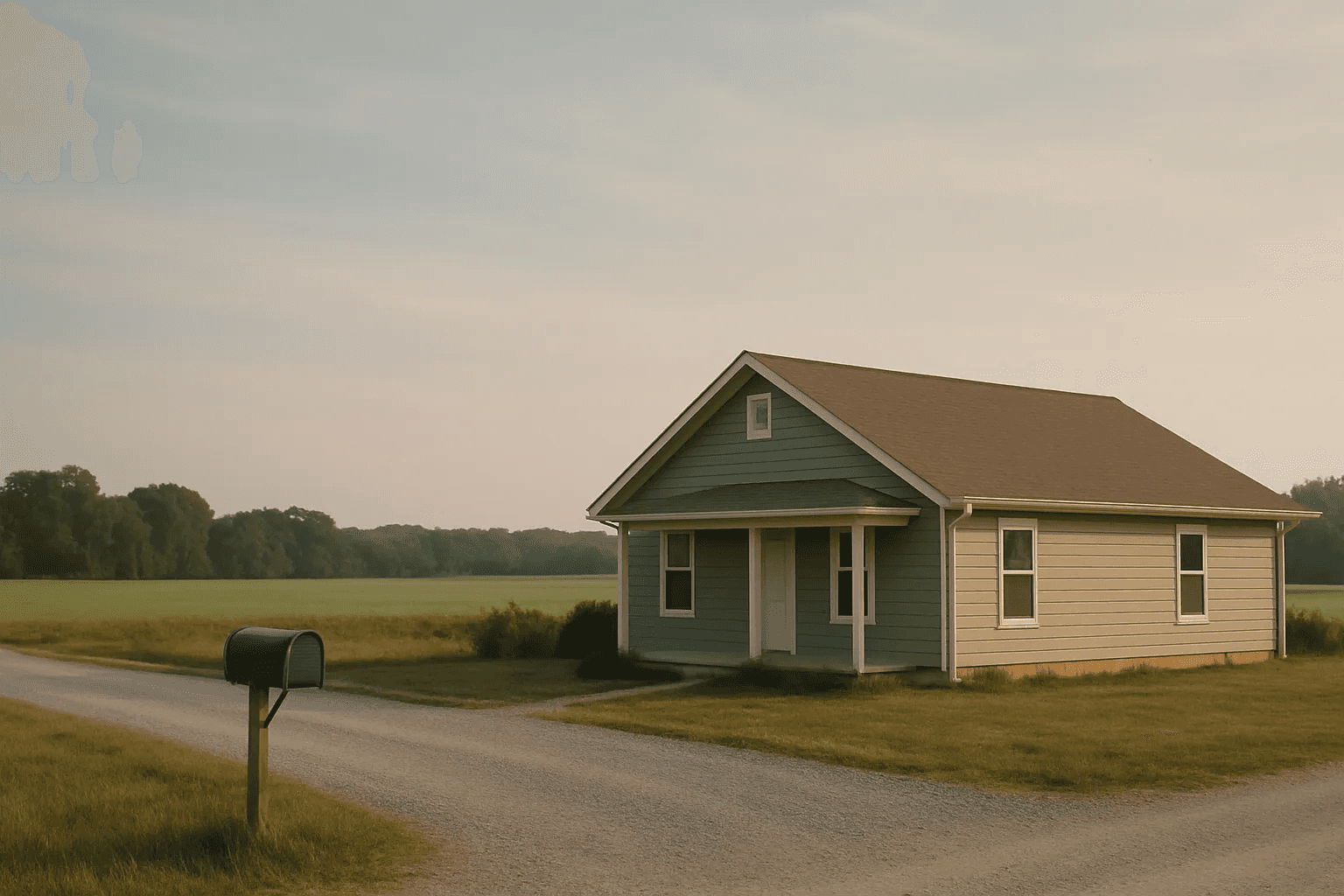
Short answer
To get a USDA guaranteed loan, the home must be in a USDA-eligible rural area, your household's adjusted income must be at or below the moderate income limit for the county, and you must be a US citizen, non-citizen national or qualified alien who will live in the home and can show steady repayment ability.
Key takeaways
- USDA's Single Family Housing Guaranteed Loan Program (Section 502) can finance up to the appraised value plus the upfront guarantee fee, so no down payment is required.
- Household adjusted income must not exceed USDA's moderate income limit, which is roughly 115% of area median income and counts every household member's income.
- USDA's standard repayment ratios are 29% for housing costs and 41% for total debt, with exceptions possible when compensating factors exist.
- By regulation, the upfront guarantee fee cannot exceed 3.5% of the loan and the annual fee cannot exceed 0.5%; USDA publishes the current, lower rates in its handbook.
- Guaranteed loans must be 30-year fixed-rate mortgages; adjustable-rate, balloon and prepayment-penalty loans are not allowed.
- Applicants must be US citizens, US non-citizen nationals or qualified aliens as defined in federal law, which does not include most temporary visa holders or DACA recipients.
At a glance
- Minimum down payment
- $0 (loan up to appraised value plus guarantee fee)
- Location
- USDA-designated rural area only
- Income limit
- Moderate income limit, about 115% of area median
- Debt ratios
- 29% housing / 41% total
- Loan term
- 30-year fixed only
- Upfront fee cap
- Up to 3.5% by regulation (current rate is lower)
- Annual fee cap
- Up to 0.5% by regulation (current rate is lower)
- Seller contributions
- Up to 6% of the sales price
In this guide11
USDA loan requirements center on three tests: where the home is, how much your household earns, and whether you can repay. The home must be in a USDA-eligible rural area. Your household’s adjusted income must be at or below USDA’s moderate income limit for the county. And you must be a US citizen, non-citizen national or qualified alien who will live in the home and can show steady income.
A USDA guaranteed loan is a mortgage from a private lender that the US Department of Agriculture’s Rural Development agency partly guarantees. The official name is the Single Family Housing Guaranteed Loan Program, often called Section 502 guaranteed. Its best-known feature is that it can finance the full price of the home, so no down payment is needed.
This guide explains each requirement using the federal regulations in force in October 2026 (7 CFR Part 3555) and USDA’s eligibility tools. If you are still comparing programs, our overview of types of mortgage loans is a good place to start.
Who qualifies for a USDA loan?
You can qualify if the home is in an eligible rural area, your household income is within the county limit, you will live in the home as your main residence, and you can show adequate repayment ability. You must also be a US citizen, US non-citizen national or qualified alien, and have the legal capacity to sign the loan.
The table below summarizes the core rules from 7 CFR 3555.151.
| Requirement | USDA guaranteed rule |
|---|---|
| Location | USDA-designated rural area |
| Household income | At or below the moderate income limit |
| Occupancy | Principal residence only |
| Citizenship | Citizen, non-citizen national or qualified alien |
| Repayment | 29% housing / 41% total debt, with exceptions |
| Current homeowners | Eligible only in limited cases |
| Loan type | 30-year fixed rate |
You do not need to be a first-time buyer. Current homeowners can qualify if their home no longer meets their needs, they will not be responsible for another USDA loan, and they lack the resources to buy without the guarantee.
Is my address USDA eligible?
USDA only guarantees loans in areas it designates as rural, using the definition in section 520 of the Housing Act of 1949. The fastest way to check is to type the address into USDA’s official property eligibility map. Many small towns, outer suburbs and unincorporated areas qualify, not only farmland.
Rural designations can change after census updates. If an area becomes non-rural, USDA still honors existing conditional commitments, and applications with a complete purchase contract before the change may still be approved. Final eligibility is decided by Rural Development when it reviews a complete application.
What are the USDA income limits?
Your household’s adjusted annual income must not exceed USDA’s moderate income limit for the county at loan approval. That limit is roughly 115% of area median income and rises with household size. USDA’s eligibility site lists the current limit for every county, and it includes an income calculator.
Two income measures matter, and they are easy to confuse:
| Income measure | Who counts | What it is used for |
|---|---|---|
| Annual and adjusted income | Every household member | Checking the income limit |
| Repayment income | Only people on the loan | Checking whether you can afford the payment |
Adjusted income allows certain deductions before it is compared with the limit, such as an amount for each child, student or adult dependent with a disability, and some childcare costs for children 12 and under.
What credit and debt ratios does USDA require?
USDA’s standard repayment ratios are 29% of repayment income for housing costs and 41% for total monthly debt. Lenders process applications through USDA’s automated underwriting system, the Guaranteed Underwriting System (GUS). Higher ratios can be approved when the system accepts them or when compensating factors exist.
The regulation lists examples of compensating factors that can justify higher ratios:
- A credit score of 680 or higher for all applicants.
- A small increase in housing cost compared with current rent.
- A proven ability to save, with cash reserves after closing.
- Continuous employment with the current main employer.
USDA’s regulation does not set one fixed minimum credit score. Lenders apply USDA’s automated system and their own standards, and many set their own floors. Lenders also review at least two years of income history and expect it to continue for at least three more years.
How much are USDA guarantee fees?
USDA charges two fees in place of mortgage insurance: an upfront guarantee fee at closing and an annual fee paid monthly. Under 7 CFR 3555.107, the upfront fee cannot exceed 3.5% of the loan and the annual fee cannot exceed 0.5% of the average unpaid balance. The rates actually charged are set by USDA and are lower.
| Fee | Regulatory maximum | How it is paid |
|---|---|---|
| Upfront guarantee fee | 3.5% of the loan | At closing, or financed into the loan |
| Annual fee | 0.5% of the average scheduled balance | Monthly, in your payment, for the life of the loan |
USDA publishes the current fee rates in its handbook HB-1-3555 and may change them over time. We could not confirm the current percentages directly from a USDA source while preparing this guide, so ask each lender to show the fee rates on your Loan Estimate, or check USDA Rural Development.
The annual fee lasts for the life of the loan. It is counted in your housing ratio. To compare it with FHA premiums and PMI, see mortgage insurance explained.
What are the USDA loan terms and loan amount?
USDA guaranteed loans must be fixed-rate loans with a term of no more than 30 years. Adjustable-rate mortgages, balloon loans and prepayment penalties are not allowed. The loan can equal the lower of the appraised value plus the upfront guarantee fee, or the purchase price plus eligible costs.
There is no separate USDA loan limit like FHA or conforming limits. The income limit and your repayment ability control how much you can borrow. Eligible acquisition costs, such as reasonable closing costs, can be included within these limits.
Sellers and other interested parties can contribute up to 6% of the sales price toward your closing costs and related items.
What are USDA property requirements?
The home must be modest, decent, safe and sanitary, and it must be your principal residence. Existing homes must be structurally sound, functionally adequate and in good repair, with safe electrical, heating, plumbing, water and wastewater systems. The site must be typical in size for the area and have all-weather road access.
USDA will not guarantee loans for:
- Investment properties or short-term housing.
- Farms, income-producing land or buildings used mainly for business.
- Purchase of an existing manufactured home, with limited exceptions.
- Homes where the seller pays more than 6% toward financing and closing costs.
New homes must meet the energy code in effect when they are built. Private wells and septic systems can be acceptable when the lender finds them safe and compliant.
Who can get a USDA loan based on citizenship?
Applicants must be US citizens, US non-citizen nationals, or qualified aliens. Federal law (8 U.S.C. 1641) defines qualified aliens mainly as lawful permanent residents, refugees, people granted asylum, certain parolees, and people living here under the Compacts of Free Association. Most temporary visa holders and DACA recipients are not on that list.
If USDA does not fit your status, our guide to a mortgage for immigrants explains which loan types may work for green card holders and visa holders.
USDA direct vs guaranteed loans
USDA runs two different home loan programs. Guaranteed loans come from private lenders and serve moderate-income households. Direct loans come from USDA itself and serve low- and very-low-income households. Direct loans can include payment assistance and longer terms, but funding is limited and processing can take longer.
| Feature | Guaranteed (Section 502) | Direct (Section 502) |
|---|---|---|
| Who lends | Approved private lender | USDA Rural Development |
| Income level | Up to moderate income | Low or very low income at approval |
| Term | Up to 30 years, fixed | Usually up to 33 years; up to 38 in some cases |
| Payment help | None | Payment assistance can lower the effective rate to as little as 1% |
| Where to apply | Any USDA-approved lender | Local Rural Development office |
Direct loan rules are in 7 CFR Part 3550. Payment assistance may be partly recaptured when you sell or stop living in the home.
How to apply for a USDA loan
You apply for a guaranteed loan through a USDA-approved private lender. The lender checks your eligibility, runs the file through USDA’s automated system, and sends it to Rural Development for the guarantee. Preparing your documents early helps, because USDA reviews every household member’s income.
- Check the property on USDA’s eligibility map.
- Check your household income against the county’s moderate income limit, counting every adult.
- Pull your credit for free at AnnualCreditReport.com.
- Gather documents: two years of income records, recent pay stubs, bank statements, and income records for all adult household members.
- Get preapproved by a USDA-approved lender and compare fee rates on the Loan Estimate.
- Make an offer, order the appraisal and complete underwriting.
- Wait for USDA’s conditional commitment, then close.
Is a USDA loan right for you?
A USDA loan is often a strong zero-down option for buyers who are not eligible for VA and who are buying in an eligible area within the income limit. Compare its current fee rates with FHA mortgage insurance on real Loan Estimates. The trade-offs are the location rule, the income cap and a fixed 30-year term.
If you have military service, compare a VA loan first. If your income is above the USDA limit or the home is not in an eligible area, look at FHA loans or conventional loans with 3% down. Our mortgage requirements by loan type guide puts all of them in one table, and the government loans hub lists every related guide.
For context, the national average 30-year fixed rate was 7.40% as of October 15, 2026 (Freddie Mac). FHA, VA and USDA rates are set by each lender and often differ.Source: Freddie Mac Primary Mortgage Market Survey, via FRED
Tools
Try it: USDA guarantee fee
Results
- Loan amount with fee financed
- $262,600
- Annual fee per month (first year)
- $76
- Annual fee, first year
- $910
In plain words
On a $260,000 USDA loan, an upfront fee of 1% is $2,600, so the loan becomes $262,600 if you finance it. An annual fee of 0.35% adds about $76 a month in the first year.
Runs in your browser. Nothing you enter is stored or sent.
USDA Guarantee Fee Calculator: Upfront and Annual Fees
Frequently asked questions
Is my address USDA eligible?
Check it on USDA's official property eligibility map at eligibility.sc.egov.usda.gov. USDA only guarantees loans in areas it designates as rural under section 520 of the Housing Act of 1949. Many small towns and outer suburbs qualify, and designations can change over time.
What are the USDA income limits?
Your household's adjusted annual income must be at or below USDA's moderate income limit for the county, which is roughly 115% of area median income and varies by household size. USDA's eligibility site lists the exact limit for each county. Income from every adult in the household counts, even people not on the loan.
How much is the USDA guarantee fee?
USDA charges an upfront guarantee fee and an annual fee, both set by the agency. Federal rules cap the upfront fee at 3.5% of the loan and the annual fee at 0.5% a year, and the rates actually charged are lower. Ask your lender for the current rates published in USDA handbook HB-1-3555.
What credit score do I need for a USDA loan?
USDA's regulation does not set one fixed minimum score; lenders use USDA's automated underwriting system and their own standards. The regulation lists a score of 680 or higher as a compensating factor that can justify higher debt ratios. Many lenders set their own minimums, so ask before you apply.
Do I need to be a first-time buyer for a USDA loan?
No. Current homeowners can qualify in limited cases, such as when their current home no longer meets their needs and they will not keep another USDA loan. First-time buyers get priority only when USDA declares a funding shortage.
Can I use a USDA loan for a farm or investment property?
No. The home must be your principal residence, and USDA will not guarantee loans for income-producing land, farms or investment properties. The site must be typical in size for the area.
What is the difference between USDA direct and guaranteed loans?
Guaranteed loans come from private lenders and serve moderate-income households. Direct loans come from USDA itself and serve low- and very-low-income households, can run 33 or 38 years, and may include payment assistance that lowers the effective rate to as little as 1%.
Sources
We checked the facts in this guide against these sources. Rules and limits change, so confirm current figures with the program or your lender.
- 7 CFR Part 3555, Guaranteed Rural Housing Program
- 7 CFR 3555.151, Eligibility requirements
- 7 CFR 3555.107, Application for and issuance of the loan guarantee (fees)
- 7 CFR Part 3550, Direct Single Family Housing Loans and Grants
- USDA Income and Property Eligibility Site
- Single Family Housing Guaranteed Loan Program
Related guides
Government-backed loans
FHA Loans in 2026: Requirements, Limits, MIP and Who Qualifies
What you need for an FHA loan in 2026: 580 and 500 credit tiers, 3.5% down, MIP costs, county loan limits, DTI rules and who no longer qualifies.
Government-backed loans
VA Home Loan Eligibility in 2026: Service Rules, Funding Fee and Limits
Who qualifies for a VA home loan in 2026: service rules, the COE, no limit with full entitlement, the funding fee table, exemptions and residual income.
Government-backed loans
FHA vs Conventional Loan: Costs, MIP vs PMI and Which Wins in 2026
FHA vs conventional loans compared for 2026: credit, down payment, MIP vs PMI, loan limits and DTI, with hypothetical cost examples of when each wins.